Kyrgyz cryptocurrency company accused of supporting Russia amid sanctions
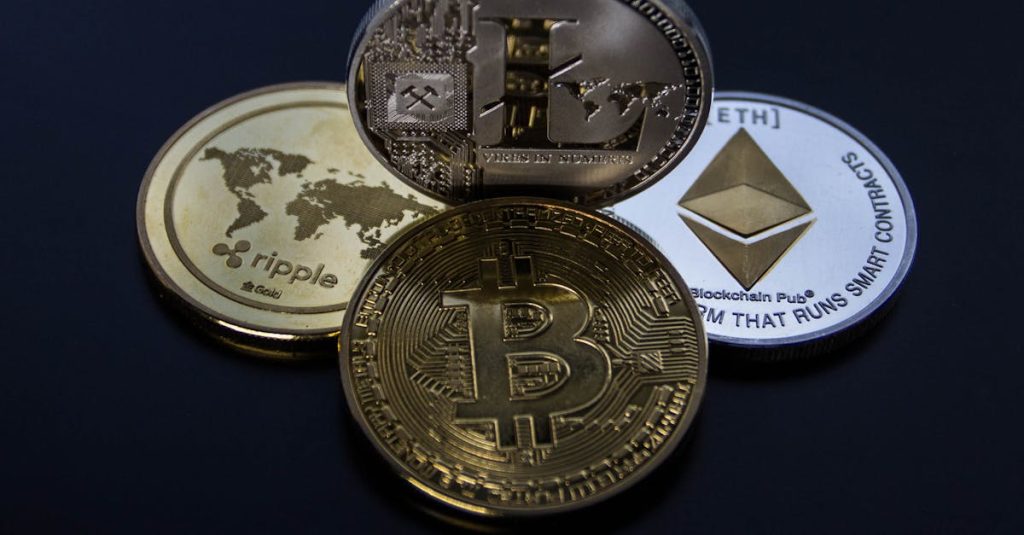
The geopolitical and financial stakes behind the Kyrgyz cryptocurrency company accused of supporting Russia in the face of sanctions
Since the beginning of 2025, the emergence of cryptocurrencies as a tool for circumventing international sanctions has increasingly concerned analysts specializing in finance and technology. The Kyrgyz company involved, whose activities raise numerous questions about transparency and regulation, appears to play a pivotal role in this strategy targeting Russia. The accusations against it highlight the geopolitical stakes linked to the use of blockchain to evade Western economic restrictions. While some governments seek to tighten their controls, other private actors are exploiting the porosity of alternative financial channels. The complexity of this situation reflects the rise of cryptocurrencies in a context of crisis, where technology can become both a weapon and a lever for freedom.

According to several investigative sources, a company registered in Bishkek, the Kyrgyz capital, allegedly facilitated the transfer of billions of dollars on behalf of Russian companies, allowing them to continue their operations despite Western sanctions. Among these cryptocurrencies, the ruble-backed stablecoin—often referred to as A7A5—occupies a central place in this geo-financial stratification. The use of blockchain thus becomes a strategic issue, as does the location of exchange platforms, often based in countries with lax regulations. The company in question, named Grinex, allegedly facilitated the transfer of at least $9 billion, but the majority of these funds remain opaque, with only partial traceability in bank statements accessible to investigators. The company was reportedly controlled by the Russian firm Netex Group, an entity implicated in several other illicit financial flow cases. The Kyrgyz authorities’ discretion in the face of this situation raises questions about their genuine desire to regulate these channels, or whether it’s a latent diplomatic issue.
Discover everything you need to know about cryptocurrencies, from the basics to the latest market trends. Learn how to invest effectively and secure your digital assets.

The regulatory environment in which these cryptocurrencies operate remains unclear. Kyrgyzstan, like many Central Asian countries, has not adopted strict measures against the use of cryptocurrencies, despite their exponential growth. The company controlled by Netex reportedly used local bank accounts to transfer funds, taking advantage of a financial system with loose rules. Experts point out that this lack of clear regulation encourages illicit transactions and complicates the detection of fraudulent practices. Furthermore, Kyrgyzstan’s proximity to Russia, as well as its membership in the Eurasian Economic Union (EEU), reinforces the impression of a clandestine support network in the face of sanctions. The international community is concerned about this situation, fearing that this flaw could serve as a catalyst for a broader financial crisis, with blockchain as an evasion tool. Some observers are mobilizing their expertise to call for stricter regulation, but diplomatic challenges make the task difficult for the local government. Aspect
Description
| Impact | Kyrgyz Regulation | Weak regulatory framework, lack of strict monitoring of cryptocurrencies |
|---|---|---|
| Facilitates illicit operations and sanctions evasion | Lobbying and diplomacy | Intertwining of foreign policy with the private sector |
| Risk of involvement in sensitive international affairs | Blockchain and transparency | Technology that can decentralize finance |
| Allows anonymous or semi-anonymous transfers, complicating traceability | Discover the fascinating world of cryptocurrencies: a comprehensive guide to the best digital currencies, how to invest, market trends, and blockchain technologies that are revolutionizing the way we transact. | How blockchain facilitates sanctions evasion: a technical overview |

Use of ruble-linked stablecoins 💵
Location in lax jurisdictions 🌍
- Fast and anonymous exchanges 🚀
- https://www.youtube.com/watch?v=9-YVaHA7iM0
- Foreign investments face rising uncertainty and risks
- For international investors, this situation raises serious questions. Confidence in cryptocurrency regulation in the region is eroding amid accusations of clandestine support for Russia. Investment flows could thus be directed toward more legally stable regions or toward less opaque blockchain assets. On the other hand, some opportunistic players could see this instability as an opportunity to accelerate their investment strategies. The rise of cryptocurrencies in the region, however, represents a challenge for global finance, where transparency and traceability remain fundamental principles. The increase in circumvention cases emphasizes the need for authorities to strengthen their regulations, otherwise blockchain could become fertile ground for fraudulent financial anonymity. Investment Type
Risks
Direct Investment in Cryptocurrencies
| High Potential in a Low-Regulation Environment | Risk of Fraud and Losses Due to Volatility | Investment in Blockchain Companies |
|---|---|---|
| Rapid Expansion, Often Little Regulation | Risk of Involvement in Illicit Activities | Traditional Assets Versus Cryptocurrencies |
| Cryptocurrencies Gaining Ground as a Safe Haven | Extreme Volatility and Lack of Supervision | Challenges for the International Community and Future Regulation |
| The cryptocurrency sticking plaster in this case serves as a revealing example of the flaws in the global financial regulatory system. The international community, particularly through the Financial Regulatory Agency (FRA), is warning against the proliferation of blockchain-related circumvention schemes. The difficulty lies in the intrinsic decentralization of cryptocurrencies, which escape any centralized control. Initiatives to strengthen supervision exist, but their application remains limited in jurisdictions concerned with preserving their sovereignty. Some experts are calling for increased cooperation between banks, governments, and technology companies to develop innovative tracking solutions. Others are proposing a common regulatory framework to regulate stablecoins, particularly those backed by national currencies. The rise of cryptocurrencies in this region of the world highlights a major challenge: ensuring the security of global finance without hampering technological innovation. | https://www.youtube.com/watch?v=oDqjiGO14Hk | A crisis of confidence that could reshape the blockchain landscape in 2025 |
The accusations against the Kyrgyz company are not isolated. They are part of a broader crisis of confidence, fueled by several similar scandals around the world. Blockchain transparency remains a contentious variable, where traceability coexists with relative anonymity. By 2025, new standards could emerge to strengthen the technology’s credibility while limiting its abuse. The rise of “hybrid” or “semi-anonymous” cryptocurrencies illustrates this trend, allowing them to reconcile innovation with regulatory compliance. However, if these solutions fail to dispel mistrust, blockchain could see its future jeopardized in the face of increased regulatory efforts. This context demonstrates both the power of this technology and its limitations in ensuring open and secure finance.
Frequently Asked Questions About the Kyrgyz Company, Cryptocurrency, and the Sanctions Evasion Strategy
What are the risks to regional financial stability?
The proliferation of illicit transfer channels can weaken the local banking system, while fueling international partners’ distrust of countries that appear to be uncontrolled intermediaries.
What role does blockchain play in this dynamic?
- The technology enables rapid and concealed transfers, while making it difficult to trace funds, which increases the ability to circumvent economic sanctions. How can cryptocurrency regulation be strengthened in this region?
- Through the establishment of international standards, cooperation between states, and new blockchain tracking technologies, to ensure the transparency of financial circuits. Is the solidarity of the international community sufficient?
- Despite efforts to limit these operations, divergent national interests are hampering an effective unified response, leaving gray areas exploited by private actors. Source:
- novastan.org

Articles similaires
Can we expect a final pause before Bitcoin reaches a new all-time high?
The cryptocurrency market is booming, and Bitcoin, in particular, has shown promising signs of recovery. With Bitcoin’s price hovering near $67,000, it’s…
 Cryptocurrency
Cryptocurrency-related kidnappings: 25 individuals charged, including 6 teenagers
Sommaire The Alarming Context of Cryptocurrency-Related Kidnappings in 2025 The specific facts: an unprecedented judicial operation A wave of arrests earlier this…
The Mt. Gox Story: A Look Back at One of Cryptocurrency’s Greatest Stories
Mt. Gox, a Japanese platform that has made its mark on cryptocurrency history, has become iconic for its meteoric rise and tragic…