Climate Diplomacy: Analyzing International Agreements and Their Influence on Global Green Investments
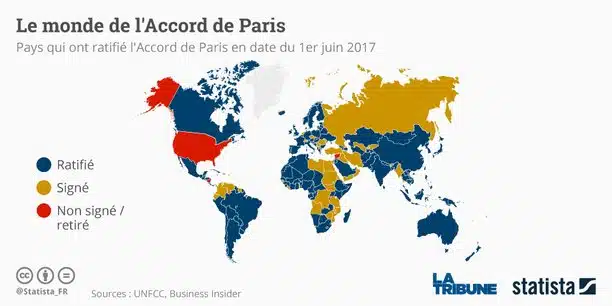
Climate diplomacy has become a key pillar in the global fight against climate change. Its influence extends well beyond political negotiations, shaping global trends in green investment. Overview of Key Climate Agreements The climate diplomacy landscape is dotted with historic agreements. The Kyoto Protocol, adopted in 1997, was one of the first to set binding emission reduction targets for industrialized countries. More recently, the 2015 Paris Agreement expanded this commitment to a global framework, with Nationally Determined Contributions (NDCs).
Targets and Commitments
These agreements established clear benchmarks for reducing greenhouse gas emissions. For example, the Paris Agreement aims to limit the increase in global temperatures to less than 2°C above pre-industrial levels, with an ambitious target of 1.5°C. Evolution and Impact The trajectory of these agreements reflects a growing awareness of climate issues. The Paris Agreement, in particular, has been a catalyst, with more than 190 countries committing to reducing their emissions.The Impact of Agreements on Green InvestmentInternational commitments have significantly influenced global investment flows. Following the Paris Agreement, investments in renewable energy have reached record levels, with multi-billion dollar commitments for green projects. Examples of Investment Shifts
Countries such as Norway and Germany have increased their investments in green technologies. Norway, for example, has invested heavily in offshore wind power, while Germany continues to lead the solar energy movement in Europe.
Role of Government Policies
National policies, inspired by these agreements, have promoted investments in sectors such as renewable energy, energy efficiency, and clean technologies. These policies include tax incentives, subsidies, and feed-in tariffs for green energy.
Challenges and Opportunities
However, the road to a green transformation is not without its challenges. Differences in development levels and financial capacities between nations pose significant challenges.
Challenges Faced
Meeting commitments made in climate agreements remains a challenge, particularly for developing countries struggling to balance economic growth with environmental imperatives.
Opportunities Created
Despite these challenges, climate agreements have opened up unprecedented opportunities for green innovation and sustainable economics. Entire sectors are being transformed, creating new jobs and driving green economic growth. Conclusion: Towards a Greener Future
Climate diplomacy, through its influence on global policies and investments, plays a crucial role in the fight against climate change. It paves the way for a more sustainable future, where green investments are not only an ecological necessity but also an economic opportunity. Continued support for these efforts is essential to ensure a prosperous and sustainable future for all.

Articles similaires
 Miscellaneous
Earn your first euros with Prime Opinion
Are you looking for an easy way to start making a few euros from home? Well, Prime Opinion is a solution worth…
 Miscellaneous
Imposters posing as counterterrorism officers steal cryptocurrency… but leave a toy behind
Sommaire How Imposters Disguised as Anti-Terrorism Police Steal Cryptocurrencies While Leaving Behind a Mysterious Toy The impostors of 2025 have perfected their…
The Art of the Take: Exploring the World of Takers
In a constantly changing world where decisions often need to be made quickly, a particular group of individuals is emerging: takers. These…